Clean Your Toilet With Zero Scrubbing: The Active Foam Hack That Erases Limescale
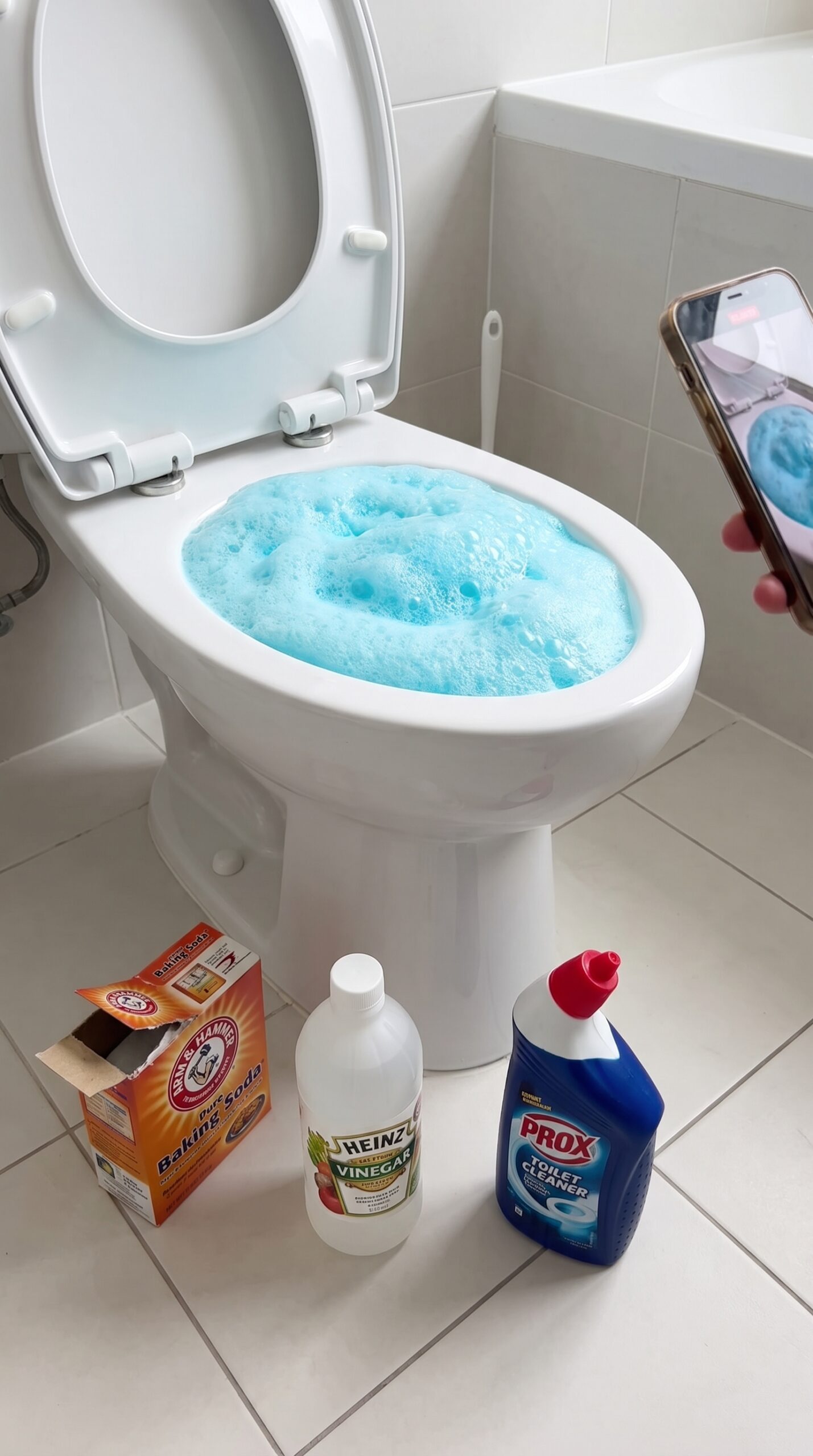
Let’s be honest: scrubbing a toilet is nobody’s favorite chore. Those stubborn yellow-brown rings and rough white limescale deposits seem to return no matter how hard you work the brush. The good news? You don’t need muscle power or expensive chemicals. With three everyday products, you can create an active cleaning foam that does the heavy lifting for you.
In this guide, you’ll learn how to clean a toilet without scrubbing using blue dish detergent, baking soda, and white vinegar, plus the safety rules that keep this hack effective and risk-free.
Why This Toilet Cleaning Hack Works
Each ingredient has a specific job, and together they make a powerful limescale remover:
- 🍋 White Vinegar
Acetic acid dissolves mineral deposits like calcium and magnesium, the main components of limescale and hard water stains.
- 🧂 Baking Soda
A gentle, mild abrasive that loosens grime. Meeting vinegar, it releases bubbles that agitate the surface.
- 🔵 Blue Dish Detergent
A surfactant that breaks down grease and residue, and helps the foam cling to the bowl instead of running down.
The fizzing action works the stains loose, while the foam gives the mixture extra contact time on the toilet walls and under the rim.
What You’ll Need
- ½ cup (about 100 g) baking soda
- 1 cup (240 ml) white vinegar, warmed slightly (not boiling)
- 2 tablespoons blue dish detergent
- Rubber gloves
- A toilet brush (for a quick final swish only)
- A small bowl or measuring cup
- Optional: an old toothbrush for the rim jets
Step-by-Step Method
Prepare the Bowl
Put on your gloves. Flush the toilet, then lower the water level slightly by pushing the water down with your brush so the foam can reach the stained areas on the bowl walls.
Add the Detergent and Baking Soda
Pour the blue dish detergent around the inside of the bowl, including under the rim. Sprinkle the baking soda over the detergent, focusing on the waterline and any limescale spots.
Activate the Foam With Vinegar
Slowly pour the warm white vinegar over the baking soda. The mixture will fizz and form a thick, active foam. Pour in stages so the foam doesn’t overflow.
Let It Work
Close the lid and leave the foam to sit for 30 to 60 minutes. For heavy, years-old limescale, you can leave it for 2 to 3 hours or overnight.
Swish and Flush
Give the bowl a quick pass with the brush (no hard scrubbing needed), then flush. Stubborn spots under the rim can be wiped with an old toothbrush. Repeat if needed for very thick deposits.
📖 Read also: How to Remove Hard Water Stains Naturally
Pro Tips for Better Results
- Use warm vinegar: Gently warmed vinegar reacts faster and dissolves limescale more effectively. Never use boiling water in a porcelain toilet, as sudden heat can crack it.
- Target the waterline: Lower the water level first so the foam touches the ring directly.
- Paper towel trick: For stubborn stains above the water, lay vinegar-soaked toilet paper over the spot and let it sit.
- Don’t forget the rim jets: Limescale often hides under the rim. Apply foam there and use a toothbrush to clear the holes.
- Maintain weekly: A quick version of this hack once a week prevents limescale from building up again.
- Ventilate: Open a window or run the fan while cleaning.
📖 Read also: 10 Baking Soda and Vinegar Cleaning Hacks
⚠️ Safety Warnings: What NOT to Mix
Even natural-based cleaners can cause problems when combined with the wrong products. Keep these rules in mind:
- Never mix vinegar with bleach. This releases toxic chlorine gas.
- Never combine with ammonia-based cleaners. This can create harmful fumes.
- Avoid mixing with commercial acidic toilet bowl cleaners (such as those containing hydrochloric acid). If you recently used bleach or another chemical cleaner, flush several times and wait before trying this method.
- Don’t seal the mixture in a closed container. The reaction releases gas and pressure can build up.
- Wear gloves and keep children and pets away during cleaning.
- Avoid using vinegar regularly on rubber seals and some natural stone surfaces, as acids can damage them.
For more guidance on choosing safer cleaning products, see the EPA Safer Choice program. For general hygiene guidance, visit the CDC Hygiene resources.
Frequently Asked Questions (FAQ)
Does this hack really remove years of limescale?
It works very well on moderate to heavy buildup, especially with longer contact time and repeated applications. Extremely thick, old deposits may need two or three rounds.
Can I use any dish soap?
Yes. Blue dish detergent is popular because it is strong against grease and produces good foam, but most standard liquid dish soaps will work.
Is this safe for septic systems?
In normal household amounts, baking soda, vinegar, and a small amount of dish soap are generally considered gentle on septic systems. Avoid overusing any cleaning product.
How often should I do this?
Once a week for maintenance, or once a month if you have soft water and little buildup.
Can I leave the foam overnight?
Yes, overnight treatment is a good option for severe stains. Just make sure the lid is closed and no one uses the toilet while it works.
Why isn’t my foam very thick?
Add the vinegar slowly and use fresh baking soda. Old or clumped baking soda reacts less effectively.
📖 Read also: 5 Natural Toilet Cleaner Recipes for a Fresh Bathroom
Conclusion
You don’t need endless scrubbing or harsh chemicals to get a sparkling toilet. With blue detergent, baking soda, and vinegar, you can create an active foam that breaks down limescale while you go about your day. Follow the steps, respect the safety rules, and repeat weekly to keep your bathroom fresh and stain-free.
Loved this hack? Save it to Pinterest and share it on Flipboard so you can find it the next time your toilet needs a refresh! 🚽✨