How to Clean a Toilet Without Scrubbing: The Active Foam Hack for Limescale
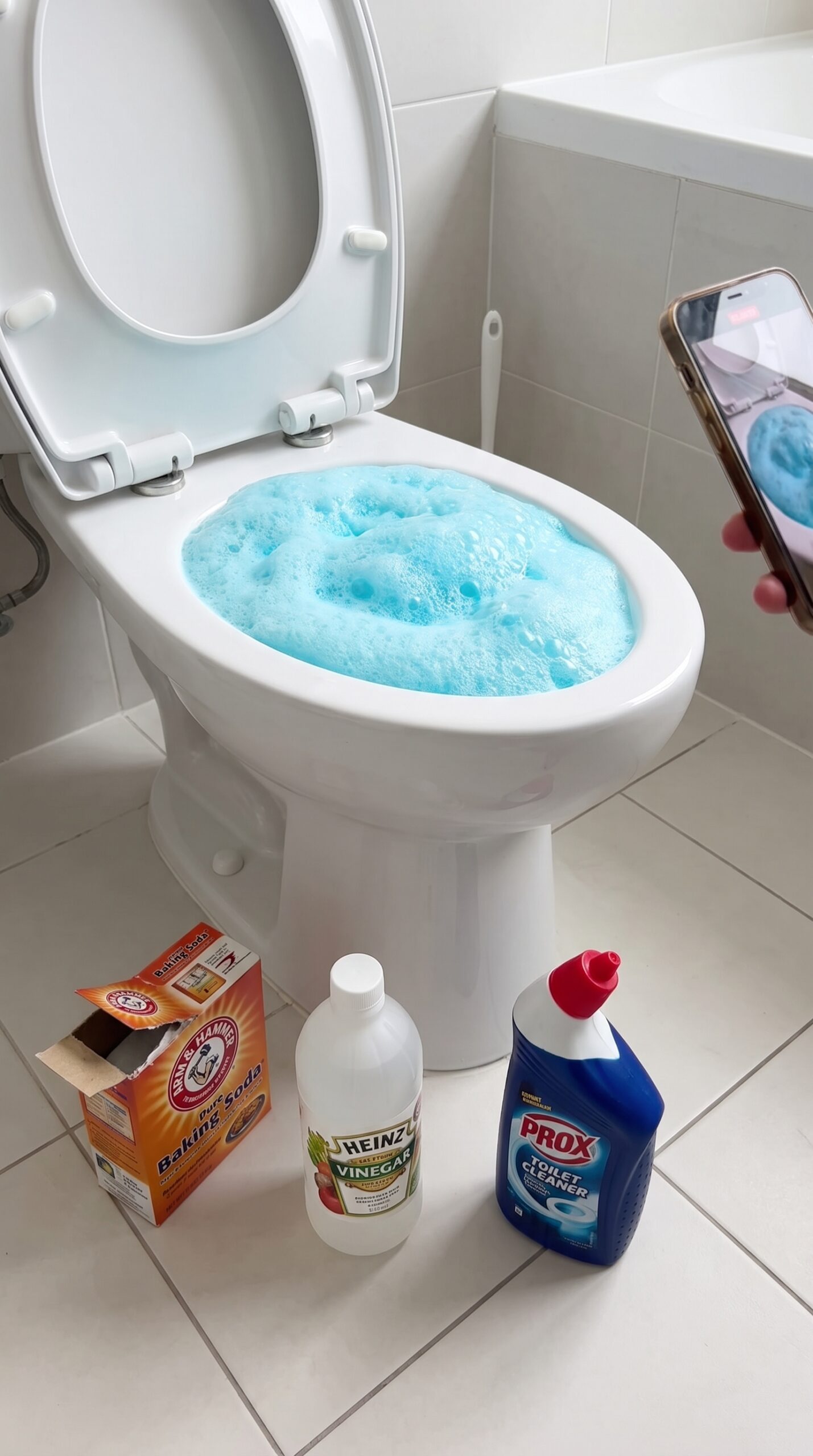
Staring at stubborn limescale rings and dreading the toilet brush? You can clean a toilet without scrubbing by letting a simple foaming mix of blue detergent, baking soda and vinegar work for you, loosening mineral buildup while you walk away.
This method uses ingredients you probably already have at home. It takes about five minutes of hands-on time and turns a hated chore into something almost effortless. Here is exactly how it works and how to do it safely.
Why the Active Foam Hack Works
- 💙 Blue detergent
Dish detergent breaks down grime and soap film and makes the foam cling to the bowl instead of sliding straight down.
- 🧂 Baking soda
A mild abrasive that gently loosens residue and helps deodorize the bowl without scratching porcelain.
- 🍶 White vinegar
Its acidity dissolves mineral deposits like limescale, and its reaction with baking soda creates fizzing action that spreads the mix around.
📖 Read also: Remove Limescale From a Kettle Naturally
What You’ll Need
- 1/4 cup blue dish detergent (any liquid brand)
- 1/2 cup baking soda
- 1 cup white vinegar, warmed (not boiling)
- Rubber gloves
- A toilet brush for a quick final swish (optional)
- A small bowl or measuring cup
Step-by-Step: Clean a Toilet Without Scrubbing
Lower the water level
Pour a bucket of water into the bowl quickly, or turn off the supply and flush, so the water level drops. This lets the foam touch more of the bowl walls and the limescale line.
Add the blue detergent
Squeeze the detergent around the rim and down the sides so it coats the whole bowl, especially the waterline and under the rim.
Sprinkle the baking soda
Spread the baking soda over the detergent, focusing on stained and crusty areas. Let it sit for a minute so it clings to the surface.
Pour in the vinegar
Slowly pour the warm vinegar around the bowl. The mixture will start to foam and fizz. Watch it climb the walls and cover the limescale.
Wait, then flush
Leave the foam to work for 30 to 60 minutes. For heavy, years-old buildup, leave it for a few hours or overnight. Give the bowl one quick swish with the brush if needed, then flush to rinse.
📖 Read also: Toilet Cleaning Tips for Hard Water Homes
Pro Tips for Better Results
- Use warm vinegar: Gently warming it speeds up the reaction with mineral deposits. Never use boiling water on porcelain.
- Target the waterline: Limescale builds at the waterline, so lower the water first to expose it.
- Repeat for old stains: Very thick buildup may need two rounds. Be patient rather than scraping.
- Prevent buildup: Repeat the hack every two to three weeks to stop limescale from returning.
- Don’t forget under the rim: Tilt the bottle so the detergent reaches the hidden jets where grime collects.
⚠️ Safety Warnings: What NOT to Mix
This mix is household-safe, but never combine it with other toilet products.
- Never mix vinegar with bleach. It releases toxic chlorine gas.
- Never mix bleach with ammonia. It produces harmful chloramine vapors.
- Don’t add commercial toilet bowl or drain cleaners to this mix, as many contain strong acids or other harsh chemicals.
- Rinse the bowl well with water before using any other cleaner.
- Ventilate the bathroom, wear gloves, and keep kids and pets away while the foam works.
Learn more: EPA Safer Choice and Poison Control.
📖 Read also: Natural Bathroom Cleaning Hacks
Frequently Asked Questions
Can I really clean a toilet without scrubbing at all?
For light to moderate limescale and stains, yes. For heavy, long-term buildup, you may need a longer soak or a second round, plus a quick brush swish.
Does baking soda and vinegar cancel each other out?
Partly, as they neutralize one another. That is why the detergent matters: it helps the foam cling to the bowl, and the fizzing action spreads the mix around while the vinegar works on mineral deposits.
Is this hack safe for septic systems?
These ingredients are generally considered gentle for septic tanks in normal household amounts. Avoid adding harsh chemical cleaners alongside them.
Will it damage porcelain or the toilet’s finish?
No, when used as directed. Avoid abrasive pads and never use boiling water, as sudden heat can crack porcelain.
How often should I use it?
Every two to three weeks is enough to keep limescale in check. In very hard water areas, once a week may help.
Can I use a different detergent color or brand?
Yes. The color doesn’t matter. Any liquid dish detergent works, though a thicker formula may cling to the bowl better.
Conclusion
With just blue detergent, baking soda and vinegar, you can clean a toilet without scrubbing and keep limescale under control with almost no effort. Let the foam work, flush, and enjoy a fresher bowl.
Save this hack on Pinterest and share it on Flipboard so you can find it next time the limescale returns! 🚽✨